2027 teacher-development pathway · SEELS Japan

120-Hour TESOL Teacher Development Program

Plan. Demonstrate. Practise. Qualify.

Develop your English teaching competencies through structured TESOL study, the SEELS Five-Step Lesson Planning Framework and assessed teaching demonstrations. Choose a specialization in Teaching English to Young Learners (TEYL) or AI Business English (AI-BE). Continue to a separate 40-hour supervised practicum to qualify for the Certificate of Completion.

120 hours of training2 specializations40-hour additional practicumJapan first · Vietnam second
Experience and Purpose

Developing Teachers Through Practice, Not Attendance Alone

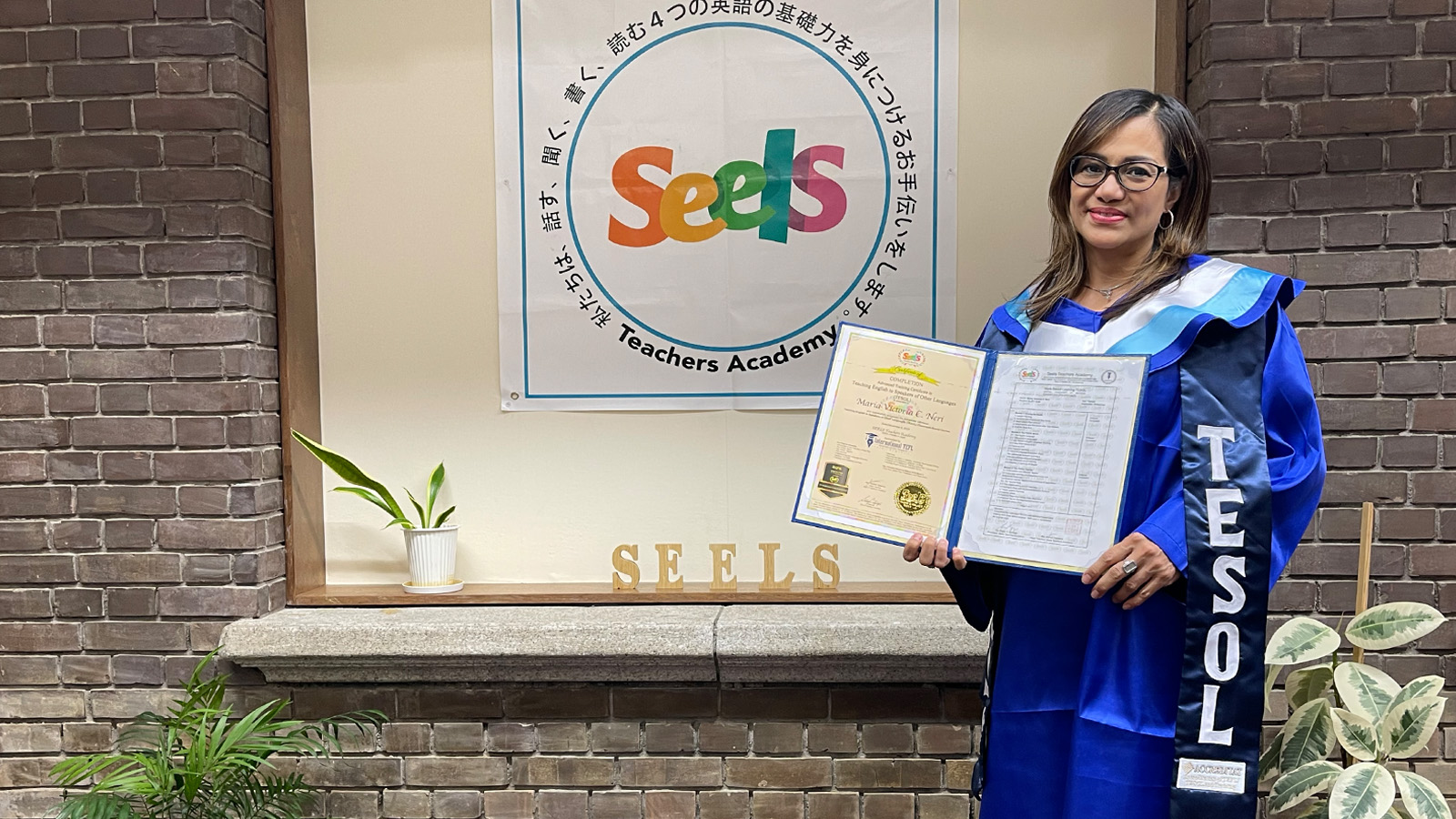
SEELS Teachers Academy has offered TESOL teacher development since 2017, historically integrated with Montessori-inspired teacher training. The Academy maintains records of more than 1,000 graduates across its programs, including approximately 700 who undertook TESOL. The journey from Japan-based teacher preparation to educational collaboration in Vietnam and, more recently, Myanmar has exposed SEELS to varied learners, language needs, and school environments. This experience now informs the independent 2027 TESOL framework: shared core pedagogy, a choice of TEYL or AI Business English specialization, and evidence of teaching competence through lesson planning, demonstration, and supervised practicum.

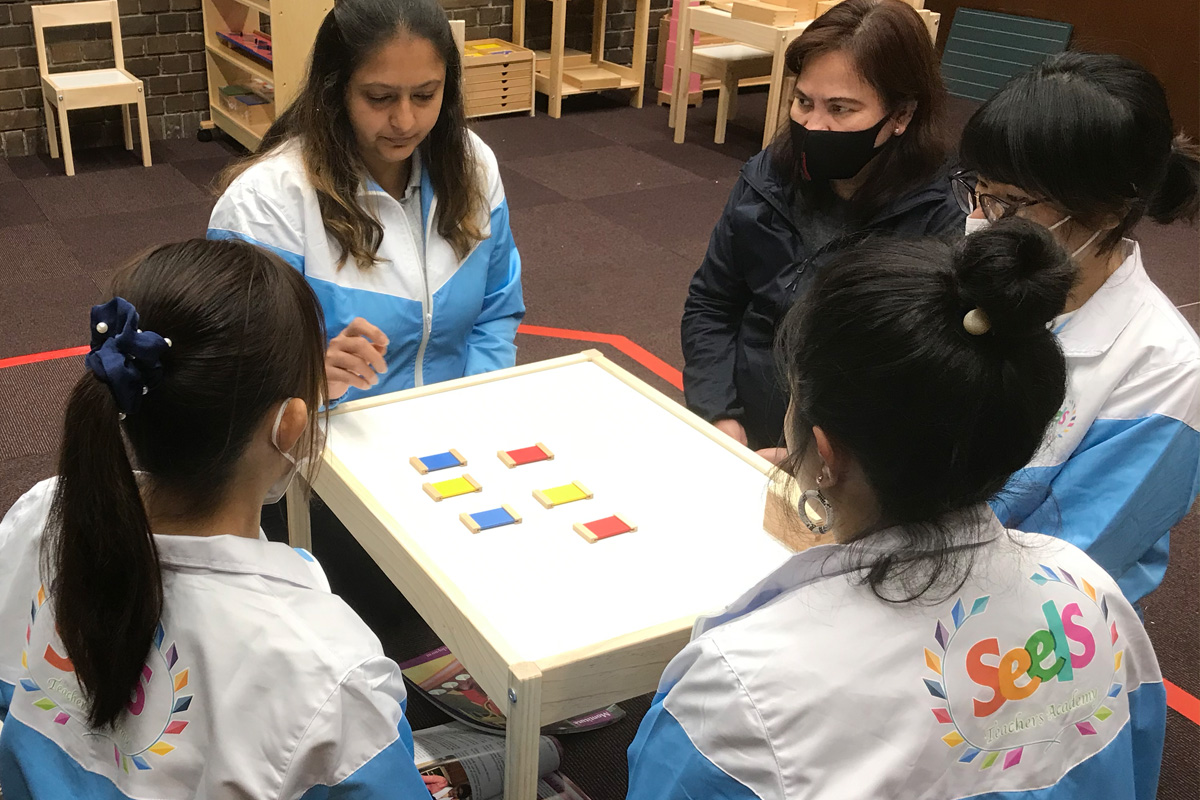
SEELS Five-Step Lesson Planning and Teacher Development
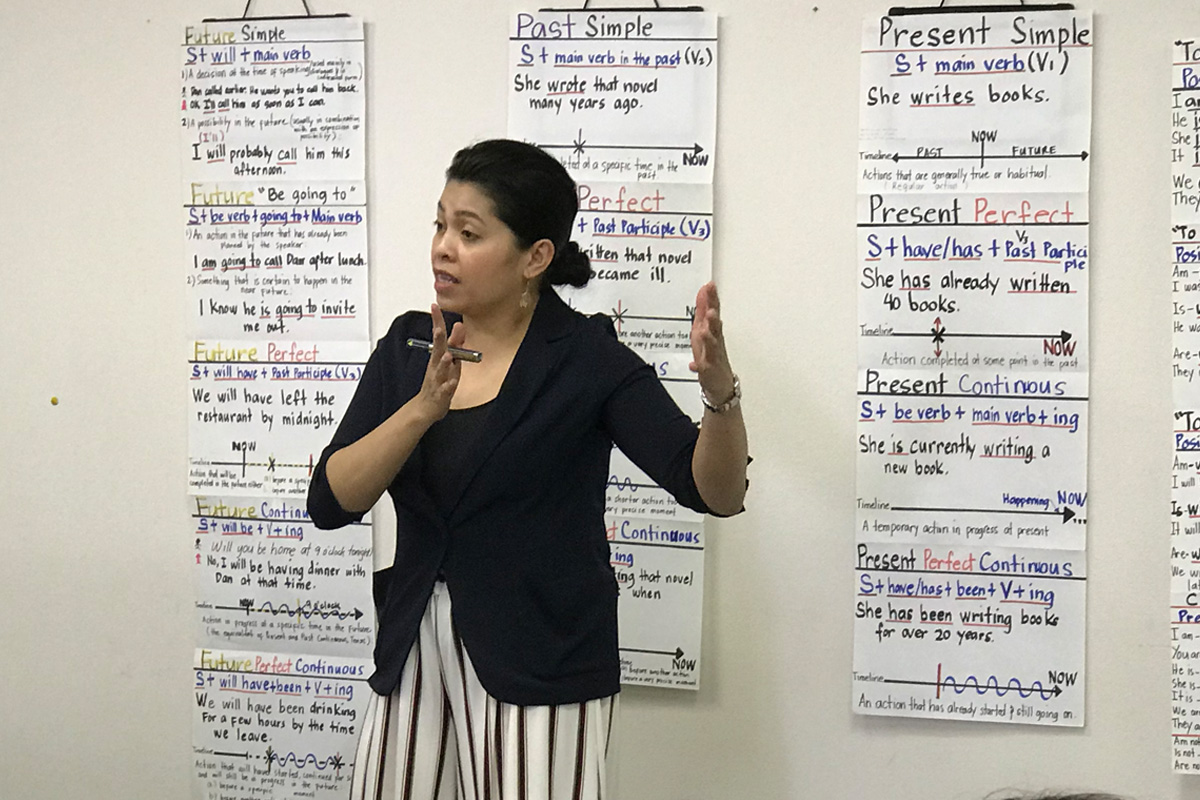
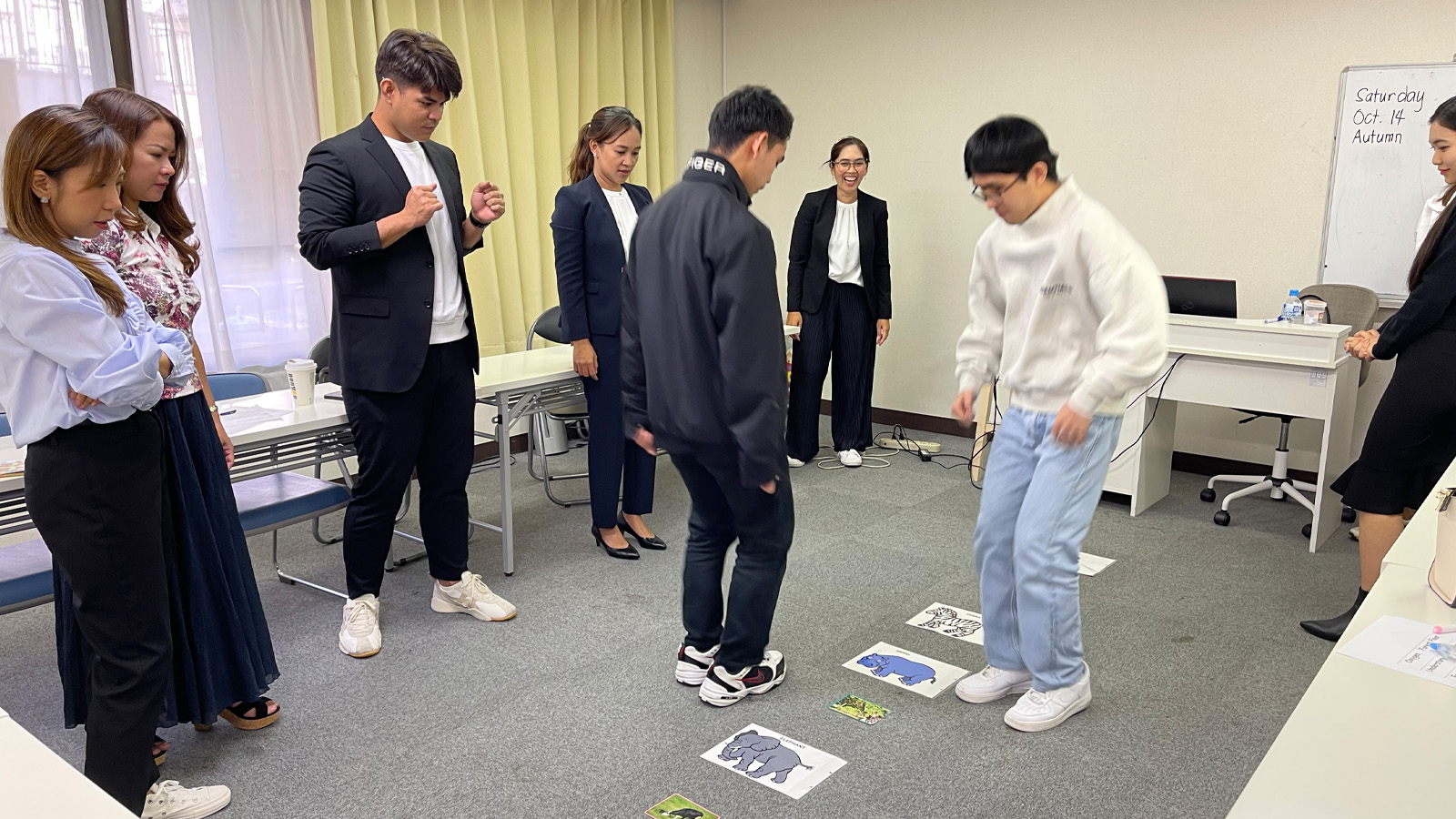
Practical teacher development through collaborative learning and guided lesson preparation.

Built Across Real Teaching Environments

SEELS's teacher-development journey began with an integrated TESOL and Montessori-inspired training approach. In Japan, trainees prepare for English teaching in a society where communication styles, learner expectations, and classroom settings vary widely.

The Academy's educational activities in Vietnam and its more recent association with Myanmar school development have expanded its understanding of multilingual learners and different teaching ecosystems.

These experiences explain why the revised course emphasizes adaptability: every teacher develops a foundation in Communicative Language Teaching, the SEELS Five-Step Lesson Plan, and professional reflection, then applies those competencies to young learners or adults studying Business English.

Local Continuity in Japan Through Stepup

Stepup English School facilitates the 120-hour TESOL course in Japan on behalf of SEELS and serves as the practicum institution for both specializations.

The arrangement maintains locally supported training and opportunities for supervised demonstration while SEELS continues to oversee its educational framework and certification standards.

Rather than treating a certificate as the endpoint, SEELS encourages trainees to build practical evidence of their learning: lesson plans, assessed teaching demonstrations, mentor feedback, and, for completion awardees, an additional 40-hour practicum portfolio.

2017

TESOL training history begins

700

Approximate TESOL graduates through 2026

5

Steps in SEELS lesson planning, developed through practice and demonstration

PLAN → DEMONSTRATE → PRACTISE → QUALIFY

Training aims to prepare participants for teaching opportunities, primarily in Japan and secondarily in Vietnam. Certificates are institution-issued professional-development credentials, not government teaching licenses or employment guarantees.

See the real teaching environments behind the pathway: Explore SEELS-affiliated schools and practicum partners in Japan, Vietnam, Myanmar, and the Philippines in the international partner gallery .

Your learning journey · Foundation

Modules 1–8: Build the confidence and practical skills to teach English

Effective English teaching is learned through understanding, preparation, repeated practice and thoughtful reflection. The first eight modules connect TESOL principles with classroom decisions. You will study learners, build your language-teaching repertoire, explore Communicative Language Teaching, practise the four language skills and develop your first complete lesson through the established SEELS Five-Step Lesson Planning Framework.

Our approach is deliberately practical. You will not simply memorize theories or complete online quizzes: you will prepare classroom resources, analyse teaching situations, design learning activities, exchange feedback and improve your teaching demonstrations. The experience prepares you for further specialization in either young learner education or AI Business English.

Select any module below to explore the content, activities and expected learning output.

M1 · Introduction to TESOL and the SEELS Five-Step Lesson Plan

Begin with a clear picture of the teaching profession and the journey ahead. Trainees examine what TESOL means in international classrooms, discuss their own motivations for teaching and discover how structured preparation can make a first lesson more confident and purposeful.

The SEELS Five-Step Lesson Planning Framework is introduced at the very beginning, not reserved for the final examination. Participants identify lesson aims, learner needs, the progression of learning activities and ways to check understanding. They establish a digital teaching folder and begin exploring Google Slides, collaborative documents and other practical resources. Digital tools are used to support pedagogy—not as substitutes for teaching.

What you will practise
  • Map personal teaching goals to the 120-hour course and two specializations.
  • Draft an initial five-step lesson outline and receive formative guidance.
  • Build a simple digital portfolio for plans, activities and reflections.
Module output: An initial five-step lesson outline and professional-development plan.
M2 · The TESOL World: Communicative Language Teaching (CLT)

Explore how English language teaching developed from grammar-focused and drill-oriented approaches toward learning through meaningful communication. Trainees compare methodologies, appreciate what each can contribute, and examine why Communicative Language Teaching (CLT) matters in contemporary face-to-face and online classrooms.

Through examples of pair work, role play, information-gap activities and purposeful tasks, participants learn to make speaking and listening central to a lesson while retaining the appropriate teaching of grammar, vocabulary and pronunciation. Google Docs, Wordwall, Padlet and other suitable tools may support participation, feedback and collaborative learning.

What you will practise
  • Contrast selected TESOL approaches and justify an appropriate teaching choice.
  • Design communicative activities with clear language and interaction goals.
  • Adapt CLT activities for young learners and adult Business English learners.
Module output: A short communicative activity with a rationale for its use.
M3 · TESOL Learners: Needs, Motivation and Language Development

Good teaching begins with the learner. Trainees investigate how age, language background, confidence, previous learning, motivation, and the learning environment influence participation and progress. Rather than assuming every student learns in the same way, they practise observing individual differences and responding to evidence of learning.

Participants examine learner needs analysis, supportive differentiation, learner autonomy, and practical ways to build engagement. A preschool child learning English through movement and story requires a different approach from a Japanese professional preparing for a business meeting. Simple surveys, observations, interviews and formative checks are introduced as decision-making tools.

What you will practise
  • Develop a learner profile based on authentic or simulated needs.
  • Choose appropriate tasks, support and feedback for different learners.
  • Plan adjustments for varying proficiency and participation levels.
Module output: A learner-needs profile that informs a five-step lesson plan.
M4 · TESOL Teachers: Professional Roles and Responsibilities

TESOL teachers are facilitators of learning, observers, communicators and reflective professionals. This module builds confidence in classroom presence while making professional conduct, intercultural sensitivity, inclusion and ethical responsibilities explicit.

Trainees practise giving comprehensible instructions, managing expectations, building respectful relationships and responding constructively when lessons do not proceed as planned. Digital classroom etiquette, safeguarding, learner privacy, and responsible handling of teaching records are addressed in realistic teaching scenarios. Through peer discussion and self-reflection, participants begin to develop their own professional teaching identity.

What you will practise
  • Practise clear, respectful instructions and classroom communication.
  • Respond to realistic learner and classroom situations professionally.
  • Set goals for continuing professional development and reflection.
Module output: A personal teaching philosophy and professional practice checklist.
M5 · Teaching Skills: Classroom Strategies and Language Support

This module moves from principles to the practical craft of teaching. Trainees develop the skills to introduce vocabulary, model pronunciation, explain meaning, check understanding, guide practice and give helpful feedback—without making a lesson unnecessarily teacher-centered.

The original SEELS curriculum's attention to pronunciation, vocabulary, grammar and professional classroom skills is retained here in a more integrated form. Participants practise elicitation, questioning, error correction, grouping learners, pacing and the use of visual materials. Grammar is taught as a resource for meaningful communication, not an isolated end in itself. Teachers compare how these techniques change between TEYL and AI-BE settings.

What you will practise
  • Build a vocabulary and pronunciation teaching sequence.
  • Use grammar in meaningful communication activities.
  • Practise questioning, feedback and error correction through micro-activities.
Module output: A set of classroom-ready language teaching activities and feedback notes.
M6 · Teaching Listening and Speaking

Help learners understand spoken English and respond with growing confidence. Trainees examine listening for gist and detail, comprehensible input, pronunciation support, interaction, fluency and the balance between accuracy and communication.

Participants plan listening and speaking lessons using audio, video, teacher modelling, conversation, information-gap tasks, dialogue and role play. They learn how to prepare learners before listening, guide active listening, and move toward purposeful speaking. The same principles can be adapted to a child telling a story, a newcomer practising everyday conversation or a professional presenting an idea at work.

What you will practise
  • Create pre-listening, during-listening and follow-up speaking tasks.
  • Plan a scaffolded speaking activity with specific communication outcomes.
  • Use audio and video responsibly and assess observable progress.
Module output: An integrated listening-speaking mini-lesson.
M7 · Teaching Reading and Writing

Explore how teachers guide learners from understanding written messages to expressing their own ideas clearly. The module introduces reading purposes and comprehension strategies, vocabulary in context, writing development, feedback and the connection between spoken and written English.

Trainees examine how reading and writing instruction differs across ages and purposes. For young learners, this may include age-appropriate phonological awareness, systematic phonics and decodable reading where relevant. For adults, it may include emails, workplace notices, short reports and practical written communication. Participants practise modelling, guided composition and purposeful correction, using documents and collaborative tools where they genuinely improve learning.

What you will practise
  • Develop activities for pre-reading, comprehension and response.
  • Design guided writing tasks with realistic audiences and purposes.
  • Assess writing constructively and adapt literacy support to the learner.
Module output: An integrated reading-writing teaching sequence.
M8 · Five-Step Lesson Planning and Teaching Demonstration

Bring the foundation modules together in a complete teaching experience. Trainees develop a lesson using the established SEELS Five-Step Lesson Planning Framework, ensuring that objectives, learning activities, resources, interaction and assessment form a coherent progression.

They present a microteaching demonstration, respond to peer and mentor observations, and revise their plans to improve clarity, pacing and learner participation. Digital tools may be included where appropriate, but the assessed competency is the quality of the lesson and its delivery. This module prepares learners to select their specialization and plan for supervised practicum.

What you will practise
  • Submit a complete five-step lesson plan and supporting materials.
  • Conduct an assessed teaching demonstration and receive structured feedback.
  • Revise the lesson plan and identify targets for supervised practice.
Module output: A reviewed five-step lesson plan, microteaching observation and reflective improvement plan.
Your learning journey · Specialization

Modules 9–12: Choose the learners you want to teach

All trainees complete the common TESOL foundation before selecting TEYL or AI Business English. The proposed TEYL pathway develops young-learner pedagogy, flashcard teaching, songs and movement, and integrated lesson demonstrations. Both specializations use the SEELS Five-Step Lesson Planning Framework and prepare trainees for separately supervised practicum.

Young learners taking part in an interactive English learning activity
Purposeful English learning for children through interactive, Montessori-inspired activities.

Pathway A: Teaching English to Young Learners (TEYL)

Help children experience English through curiosity, communication and joyful learning. This specialization brings together child development, Montessori-inspired language activities, storytelling, vocabulary, listening and speaking, and age-appropriate early literacy. It prepares trainees to design purposeful English lessons for children in preschools, tutoring programs and English conversation schools.

TEYL is especially relevant to SEELS's experience in Japan and Vietnam. It is appropriate for aspiring teachers who enjoy working with children and want to develop classroom confidence beyond memorized activities.

  • Design child-centered activities that have clear language objectives.
  • Prepare and demonstrate five-step lessons using accessible materials.
  • Observe learner responses and adjust instruction thoughtfully.
  • Prepare for a supervised placement with appropriate safeguarding.
Apply for TEYL

TEYL specialization curriculum

Proposed TEYL hour allocation: M9 (8) + M10 (12) + M11 (12) + M12 (8) = 40 specialization hours, alongside a proposed 80-hour TESOL core. Final allocations are subject to approval of the master 120-hour timetable.

Expand each module to see how classroom practice, teaching materials and professional preparation develop across the pathway.

M9 · Montessori-Inspired Teaching English to Young Learners · 8 hours

Explore child development, EFL learner differences, Montessori-inspired principles, safe classroom routines, observation, phonological awareness and age-appropriate early literacy. Participants establish language objectives and apply the SEELS Five-Step Lesson Planning Framework with PPP where suitable.

Module output: A young-learner profile and initial Five-Step Lesson Plan.
M10 · Montessori to EFL Flashcard Teaching · 12 hours

Develop practical language presentations using Montessori-inspired language cards, picture and classified cards, nomenclature materials, the Three-Period Lesson and EFL flashcard techniques. Practise vocabulary presentation, listening, speaking, retrieval, categorisation and movement-supported activities. Apply PPP within the established SEELS Five-Step Lesson Plan.

Module output: A complete Five-Step Lesson Plan and assessed flashcard-based teaching demonstration.
M11 · Songs, Music, and Movement for Language Learning · 12 hours

Select, apply and create purposeful educational songs and chants for EFL listening, speaking, vocabulary, phonological awareness and movement. Explore pulse, rhythm, pitch, TPR, storytelling and original songwriting. Integrate flashcards, songs and movement into one complete Five-Step Lesson Plan, identifying Presentation, Practice and Production within the relevant stages. Singing a memorized song alone does not establish independent language production.

Module output: One complete integrated Five-Step Lesson Plan, a group original educational song and an assessed teaching demonstration.
M12 · Integrated TEYL Teaching, Assessment and Practicum Readiness · 8 hours

Consolidate child-centred pedagogy, systematic synthetic phonics foundations, observation, differentiation, safeguarding and formative assessment. Refine integrated Five-Step lessons, evaluate learner language production and demonstrate teaching competency. Prepare for an additional supervised practicum, subject to approved placements and supervision.

Module output: An assessed integrated TEYL teaching portfolio, reflection and practicum-readiness plan.

TEYL modules available as WEA School Clinic mini-courses

Selected SEELS TESOL–TEYL modules may also be delivered independently through the SEELS Weekend Academy (WEA) School Clinic for partner-school teacher development, including preparation for supervised tutorial practice at Good Shepherd Montessori School (GSMS), Antipolo.

Standalone professional-development courseDurationRequired teaching evidence
Montessori to EFL Flashcard Teaching (TEYL M10)12 hoursFive-Step lesson plan and flashcard teaching demonstration
Songs, Music, and Movement for Language Learning (TEYL M11)12 hoursOne integrated Five-Step lesson plan using PPP, flashcards, songs and movement; assessed demonstration

Standalone WEA course certificates are not TESOL certificates. If a participant later enrolls in the full TESOL–TEYL pathway, SEELS may consider recognition of equivalent completed modules after checking documented hours, outcomes and assessments. No hours are double-counted. GSMS practicum opportunities depend on actual learners, school approval and qualified supervision.

Pathway B: AI Business English (AI-BE)

Prepare to teach English that adults can actually use in work and business. SEELS's revised AI Business English pathway moves beyond the limitations of a traditional grammar-heavy Business English course. Trainees begin with learners' authentic communication needs, then design lessons for workplace interaction, customer relations, hospitality, tourism, meetings and other professional settings.

AI tools can help generate practice materials, simulate workplace scenarios and support feedback, but successful teaching depends on responsible judgment. You will learn to check AI output for accuracy, cultural appropriateness, privacy and its value to the learner.

  • Identify adult learners' workplace communication goals.
  • Develop realistic communication tasks and role-play scenarios.
  • Use AI responsibly to support lesson preparation and feedback.
  • Demonstrate a five-step Business English lesson and prepare for supervised teaching.
Apply for AI-BE
Adult professionals practising business communication in an AI-assisted English learning session
Business English teaching for meaningful workplace communication and adult learning.

AI-BE specialization curriculum

These modules emphasize workplace relevance, critical use of AI, observed teaching practice and readiness to work with adult learners.

M9 · Understanding Adult Learners and Business English Needs

Business English begins with real people and real workplace communication, not an isolated grammar syllabus. Trainees explore adult learning, learner autonomy, workplace expectations, intercultural communication and needs analysis across sectors such as hospitality, tourism, small businesses and professional services.

They identify situations where learners need English to greet customers, explain services, clarify problems, participate in meetings or write effective messages.

What you will practise
  • Conduct a simple workplace English needs analysis.
  • Translate business tasks into meaningful language objectives.
Module output: An adult learner and workplace communication profile.
M10 · Business Communication and Responsible AI-Assisted Teaching

Learn how AI can support—not replace—the judgment of a skilled English teacher. Trainees work with realistic business situations to develop role plays, dialogues, speaking practice, email-writing tasks, customer-service simulations and feedback activities.

They evaluate AI-generated material for accuracy, authenticity, cultural appropriateness, confidentiality and suitability for learners. Grammar and vocabulary are retained as tools serving communication. This module draws on SEELS's new AI Business English educational direction rather than simply repackaging the older grammar-heavy Business English course.

What you will practise
  • Create workplace tasks and critically review AI-assisted resources.
  • Identify privacy and quality risks before using AI outputs.
Module output: A curated AI-assisted Business English activity set.
M11 · AI-BE Five-Step Lesson Planning and Demonstration

Build an actionable five-step lesson around an authentic adult business communication objective. Trainees may select hospitality, tourism, customer service, meetings, presentations, travel or another approved professional context.

They demonstrate the lesson, explain their teaching decisions and assess whether AI-supported content actually improves learning. Mentors evaluate the instructional sequence, clarity of workplace relevance, learner interaction and feedback.

What you will practise
  • Submit a five-step AI-BE lesson with justified resources.
  • Demonstrate an adult communication lesson and respond to critique.
Module output: An assessed AI-BE teaching demonstration.
M12 · AI-BE Professional Application and Practicum Preparation

Prepare for supervised teaching with adult learners in approved Business English programs. Trainees review learner privacy, appropriate AI use, professional boundaries, lesson records, mentor supervision and the practical demands of online and face-to-face instruction.

They refine a series of workplace communication lessons and prepare a portfolio that can support the additional 40-hour supervised practicum.

What you will practise
  • Develop an adult learner practicum plan and appropriate evidence.
  • Demonstrate professional readiness for supervised delivery.
Module output: An AI-BE practicum-readiness portfolio.

One foundation, two applications. Both pathways use the established SEELS Five-Step Lesson Planning Framework. A trainee selects one specialization for Modules 9–12; the second specialization may be studied separately in future professional development.

Two certificates

Participation and demonstrated competency are different achievements

1 · Certificate of Attendance

SEELS 120-Hour TESOL Teacher Training

For trainees satisfying the prescribed attendance requirements for the academic training, including their selected specialization. The certificate documents training participation and actual attendance hours; it does not certify practicum completion.

2 · Certificate of Completion

SEELS TESOL with Supervised Teaching Practicum

For trainees who complete the 120-hour coursework, approved five-step lesson plan, satisfactory teaching demonstration and 40 additional hours of supervised practicum, with required evidence and mentor assessment.

120-hour training→Attendance certificate→40-hour practicum→Completion certificate

The complete pathway comprises 160 hours of professional preparation (120 hours of academic training plus 40 hours of supervised practicum). The completion certificate is awarded only when all prescribed competency requirements are met.

Teaching in authentic settings

40-Hour Supervised Teaching Practicum

After the 120-hour training, eligible trainees proceed to an additional 40-hour supervised practicum. In Japan, Stepup English School is SEELS’s practicum institution for both TEYL and AI Business English, as well as the local facilitator of the TESOL course. Other approved opportunities may be arranged through appropriate SEELS partner institutions and programs in Vietnam, Myanmar or the Philippines, subject to actual operations, supervision and written placement arrangements.

From guided demonstrations to supervised teaching

Stepup English School provides a Japan-based setting for trainees in both specializations to apply their lesson plans with suitable learners under supervision. Japan-based training is facilitated by Stepup on behalf of SEELS; SEELS retains curriculum oversight and certification responsibility. Other partner placements are considered individually rather than automatically guaranteed.

This stage is a supervised bridge from a planned demonstration to real teaching responsibility. Under the program's practicum framework, trainees develop authentic lesson sequences, gain feedback on learner interactions and reflect on the adjustments needed for effective practice. The practicum is additional to the 120-hour academic training.

The original SEELS TESOL practicum model included online teaching sessions with Japanese and Vietnamese learners, observation, mentor feedback, video or reflection records and teaching portfolios. These proven elements will inform the revised arrangements across appropriate online, face-to-face or blended partner programs.

  • Plan and submit five-step lessons for mentor review.
  • Complete verified teaching and related supervised practicum activities.
  • Record feedback, reflections, learning evidence and professional growth.
  • Pass required assessments before the Certificate of Completion is issued.
Supervised teaching practicum
Supervised practice helps trainees turn lesson planning into confident teaching.

Prepare

Agree on a placement plan, learner group, safeguarding rules, teaching objectives and mentor supervision.

Teach and document

Apply approved five-step lesson plans, maintain an authenticated practicum log, receive feedback, and collect appropriate teaching evidence.

Reflect and qualify

Submit a portfolio and mentor evaluation. Successful trainees are awarded the Certificate of Completion.

Placement conditions: Japan, Vietnam and Philippine partner programs may participate, subject to available placements, host approval, learner consent, privacy and child-protection standards, and applicable immigration or employment requirements. Placements and paid jobs are not guaranteed.

International teaching ecosystems · Partner schools

Learn in a community of schools, not only in a virtual classroom

SEELS's teacher-development experience has grown across Japan, Vietnam, Myanmar and the Philippines. These school and learning-centre relationships connect professional study with different learner ages, languages, school cultures and instructional needs. As you prepare for the five-step lesson plan and assessed demonstration, you also learn to think about where and how your teaching can make a difference.

The institutions below are part of the wider SEELS education and teacher-development network. Stepup English School in Tama City facilitates Japan's 120-hour TESOL training and serves as a practicum institution for both TEYL and AI Business English. Other institutions may support supervised practice under specific agreements and capacity arrangements. Browse each school's information to understand the environment in which teachers grow.

🇯🇵 Japan

3 institutions
Stepup English School — partner school or learning centre
Tama City, Tokyo

Stepup English School

Japan-based facilitator for the 120-hour TESOL; designated practicum institution for both TEYL and AI-BE.

View school / partner information ↗
Chiba SEELS DX International School — partner school or learning centre
Mobara, Chiba

Chiba SEELS DX International School

Montessori-inspired early-years and English-language learning environment.

View school / partner information ↗
Tokyo International Public School — partner school or learning centre
Edogawa, Tokyo

Tokyo International Public School

International early-childhood school environment; any TESOL practicum placement is confirmed separately.

View school / partner information ↗

🇻🇳 Vietnam

1 institution
Montessori English Center — partner school or learning centre
Vietnam

Montessori English Center

SEELS-associated Montessori and English teaching ecosystem; practicum scope and capacity require host confirmation.

View school / partner information ↗

🇲🇲 Myanmar

1 institution
Myanmar SEELS International School — partner school or learning centre
Nay Pyi Taw

Myanmar SEELS International School

Part of SEELS’s developing international education network; practicum availability is subject to local authorization and readiness.

View school / partner information ↗

🇵🇭 Philippines

6 institutions
Scuola Bambini dei Santa Barbara, Inc. — partner school or learning centre
Santa Barbara, Iloilo

Scuola Bambini dei Santa Barbara, Inc.

Local school and community-linked teacher-development environment.

View school / partner information ↗
Tutoria Learning Center — partner school or learning centre
San Mateo, Rizal

Tutoria Learning Center

Tutorial and language-learning environment for supervised teacher development.

View school / partner information ↗
Fairyland Grade School, Inc. — partner school or learning centre
Ususan, Taguig City

Fairyland Grade School, Inc.

School-based teacher development, literacy support and guided classroom practice.

View school / partner information ↗
Good Shepherd Montessori School — Antipolo — partner school or learning centre
Antipolo City, Rizal

Good Shepherd Montessori School — Antipolo

Montessori-inspired school partnership; practical assignments depend on actual learner programs and readiness.

View school / partner information ↗
Little Thinkers Early Learning Center — partner school or learning centre
Davao City

Little Thinkers Early Learning Center

Early-learning setting for teacher formation and supervised practice where available.

View school / partner information ↗
Hope Zoel Young Minds Builder, Inc. — partner school or learning centre
San Pablo City, Laguna

Hope Zoel Young Minds Builder, Inc.

School-based professional development and supervised teaching opportunities when available.

View school / partner information ↗
Practicum and institutional safeguards: Being listed as a SEELS partner does not guarantee an individual practicum placement. A 40-hour placement requires host confirmation, eligible learners, an approved supervising mentor, consent and privacy protection, safeguarding and a documented learning plan. International travel, visa arrangements and employment are not included or guaranteed. Links for Vietnam and Myanmar currently lead to SEELS’s international school directory until individual official pages are confirmed.


Institutional recognition

An international teaching journey, and a new stage of institutional independence

Since 2017, SEELS has developed its TESOL training alongside Montessori-inspired education and teaching partnerships. Experience in Japan, Vietnam and more recently Myanmar has brought the Academy into contact with different teaching ecosystems—from young learner classrooms to emerging adult Business English settings. This range of practice has informed a curriculum that is both internationally relevant and grounded in classroom realities.

Previous relationships with ACCREDITAT, ITEFLAC and CPD Services UK formed part of SEELS's development. Building on that history and a record of approximately 700 TESOL graduates, SEELS is establishing its own 2027 institutional certification standards: a common TESOL foundation, learner-specific specializations, assessed five-step lesson planning and teaching demonstration, and documented supervised practicum.

Enrollment planning

Training schedule and tuition

Japan-based trainees

Planned total tuition: ¥75,000

Five-month training. The monthly payment description currently provided is ¥12,000 plus consumption tax, which totals ¥66,000 over five months at 10% tax, not ¥75,000.

Payment schedule pending confirmation. A complete written breakdown of all fees, taxes, and installments will be provided before enrollment or payment.

Philippines-based trainees

Existing published promotional tuition: ₱14,000

Philippine tuition and any applicable practicum supervision charges are subject to confirmation for the 2027 intake. Request the official fee schedule before paying.

Practicum charges: Whether the additional 40-hour practicum is included in tuition or carries a separate cost will be stated in the written enrollment terms before trainees commit.

Frequently asked questions

Is the practicum included in the 120 training hours?

No. The 40-hour supervised practicum is additional, making 160 hours of total professional preparation for trainees who complete both stages.

Can I receive a certificate before completing practicum?

Yes. Trainees meeting the attendance rules receive a Certificate of Attendance indicating actual training hours. The Certificate of Completion requires the additional 40-hour supervised practicum and successful assessments.

Can I choose TEYL or AI-BE?

Yes. Modules 1–8 are common. You select TEYL or AI Business English for Modules 9–12.

What professional recognition does the SEELS TESOL Certificate provide?

SEELS Teachers Academy has provided TESOL and teacher-development programs since 2017. Its graduate records cover more than 1,000 participants across SEELS programs, including approximately 700 who undertook TESOL. Over the years, the Academy has also benefited from international accreditation relationships as part of its institutional development.

SEELS's development has not taken place in a single classroom or country. Its educational and partner-school experience in Japan, Vietnam and, more recently, Myanmar encompasses different learner ages, teaching environments, languages and professional needs. Working across these varied teaching ecosystems has contributed to SEELS's decision to establish its independent institutional certification framework for 2027—one that can preserve common TESOL standards while allowing meaningful TEYL and AI Business English specialization.

The revised pathway emphasizes Communicative Language Teaching (CLT), the SEELS Five-Step Lesson Planning methodology, guided teaching demonstrations and authentic supervised teaching practice. Trainees can pursue two certification levels:

  • Certificate of Attendance: Awarded to participants who meet the attendance requirements for the 120-hour TESOL training, including Modules 1–8 and their selected TEYL or AI-BE specialization in Modules 9–12. The certificate identifies the actual training completed.
  • Certificate of Completion: Awarded after successful coursework, an approved five-step lesson plan, a satisfactory teaching demonstration and an additional 40 hours of supervised practicum through a SEELS-approved partner institution or program. This represents 160 hours of total professional preparation.

In Japan, Stepup English School facilitates the 120-hour TESOL training on behalf of SEELS and serves as a practicum institution for both TEYL and AI-BE. Practicum activities are coordinated with actual learners and qualified supervision, subject to scheduling, safeguarding and available placement capacity. SEELS retains responsibility for its curriculum standards, assessments and institution-issued certification.

SEELS certificates document institutional training and, for completion awardees, assessed teaching competence. Acceptance for employment, further study or professional recognition depends on each institution's, employer's and relevant authority's requirements; they are not government teaching licences.

Our commitment: To prepare confident, competent and reflective English teachers who can plan purposeful lessons, demonstrate effective teaching, and serve learners across different cultures and educational settings.

Who facilitates TESOL training and supervised practicum in Japan?

Stepup English School is SEELS's designated Japan-based facilitator for the 120-hour TESOL program and a practicum institution for both TEYL and AI Business English. This arrangement allows the program to continue locally while SEELS's Representative Director is temporarily away from Japan. The school coordinates guided learning and supervised teaching opportunities in accordance with SEELS program requirements.

Stepup's role in facilitation and practicum does not transfer ownership of the SEELS curriculum or responsibility for issuing SEELS certificates. All practicum assignments remain subject to suitable learners, supervisor availability, safeguarding procedures and agreed schedules.

Does completing TESOL guarantee a teaching job in Japan or Vietnam?

No. Job placement, work authorization and employer acceptance depend on separate requirements. SEELS supports professional preparation but cannot guarantee employment.

Can WEA mini-courses count toward TESOL–TEYL?

SEELS may recognize equivalent WEA School Clinic training in Montessori to EFL Flashcard Teaching (12 hours) and Songs, Music, and Movement (12 hours) toward the corresponding TEYL modules after verifying attendance, learning outcomes and assessment records. Recognition is not automatic; participants must meet all remaining 120-hour TESOL requirements. Hours cannot be counted twice.

Express your interest

Apply for the next TESOL intake

Submit your interest in the next SEELS TESOL intake using the application form below. Select TEYL or AI Business English and indicate your preferred starting month. SEELS will contact you with the available schedule, tuition details and next steps.

Applications are submitted through the website form service used in the original page. SEELS will contact you about your chosen pathway, schedule and official fee arrangements.